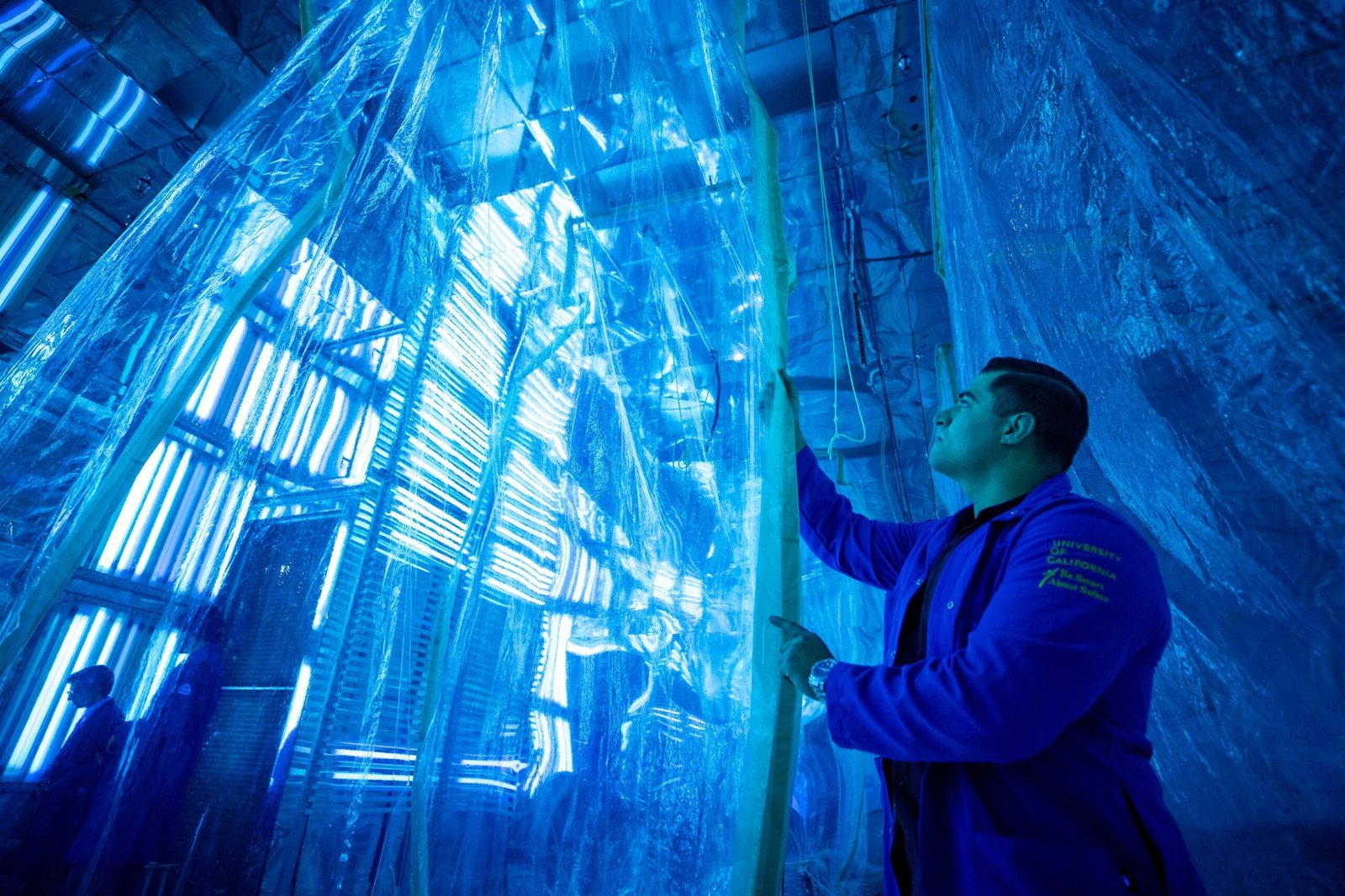
At the University of California, Riverside (UCR), scientific breakthroughs depend on quickly moving from a hypothesis to a finished study. Yet for many researchers, the path to federal grants is often blocked by what UCR refers to as a “compliance tax” – technical red tape and rigorous security and technical oversight that occasionally forced the university to decline critical funding, stalling innovation before it even began.
To help reclaim these lost opportunities, UCR partnered with Google Public Sector to leverage Stellar Engine, a specialized automation framework designed to power more secure computing environments for researchers. By using this technology to build their Secure Enclave, UCR is shifting the routine burden of compliance from the researcher directly to the infrastructure itself.
Scaling secure innovation
Before partnering with Google Public Sector, UCR’s infrastructure for sensitive research was often ad hoc and difficult to scale. While third-party providers offered alternatives, the costs were often prohibitively high for long-term projects. The true catalyst for change was the strategic need to support un-supportable research – projects with stringent security requirements that were previously too complex for faculty to navigate alone. These requirements extend far beyond standard federal mandates; today, a host of organizations and granting agencies are requiring increasingly rigorous security controls to protect the integrity of sensitive research data.
The solution: A secure enclave for data
To bridge this gap, UCR collaborated with Google Public Sector to develop a specialized, turnkey cloud container designed to meet rigorous boundary and internal controls. At the heart of this environment is Stellar Engine, which automates and enforces the complex security postures required for sensitive data, shifting the technical burden away from the researcher and into the infrastructure.
Google Cloud provides the foundation for Stellar Engine and its secure enclave with accredited cloud services and a Zero Trust architecture. This creates a hardened environment – a digital safe harbor where security settings are pre-configured to the highest standards and unnecessary access points are closed off. For researchers, this means:
- Built-in security: Foundational cloud infrastructure controls required for compliance are mapped and verifiable, allowing the university to focus its resources on its internal organizational and administrative policies.
- Data sovereignty: A secure network boundary ensures that sensitive information, such as Controlled Unclassified Information (CUI), remains protected.
- Research agility: By providing a pre-validated space, the university removed the technical barriers that previously hindered high-impact funding opportunities.
Accelerating UCR’s research capacity
The most significant result of this partnership is a fundamental shift in UCR’s research capacity. The university can now confidently bid on and host projects by deploying workloads on infrastructure designed to support NIST 800-171 and CMMC Level 2 control frameworks – contracts that were previously out of reach due to risk or cost.
Beyond the technical specs, it has made a profound human-centered impact:
- Empowered faculty: Researchers can now focus on making discoveries that support their communities, not being bogged down by IT hurdles.
- Societal impact: As a “safe harbor” for sensitive work, UCR facilitates progress in fields that directly impact public health, community safety, and national security.
- Institutional excellence: By offering seamless compliance, UCR has become a top destination for global talent ready to compete for prestigious national grants.
- Scalable collaboration: UCR plans to share these lessons with the University of California Office of the President and the broader higher education community at conferences like EDUCAUSE.
Advancing the future of innovation
With the first research teams set to onboard in 2026, the university plans to transition from its initial secure builds to even more robust, high-security environments over the next 18 months.
UCR is doing more than just securing data – it is reclaiming vital time for its researchers to focus on the breakthroughs that will define the next generation of scientific discovery.
We are excited about our presence at Google Cloud Next ’26 where we will showcase our technology in action. Stop by the Google Public Sector hub on the expo showfloor (booth# 7809) and don’t miss UCR’s CIO, Matt Gunkel, and other leaders during their breakout session: “Building the AI-ready and intelligent campus of tomorrow, today”.