When agents go off course
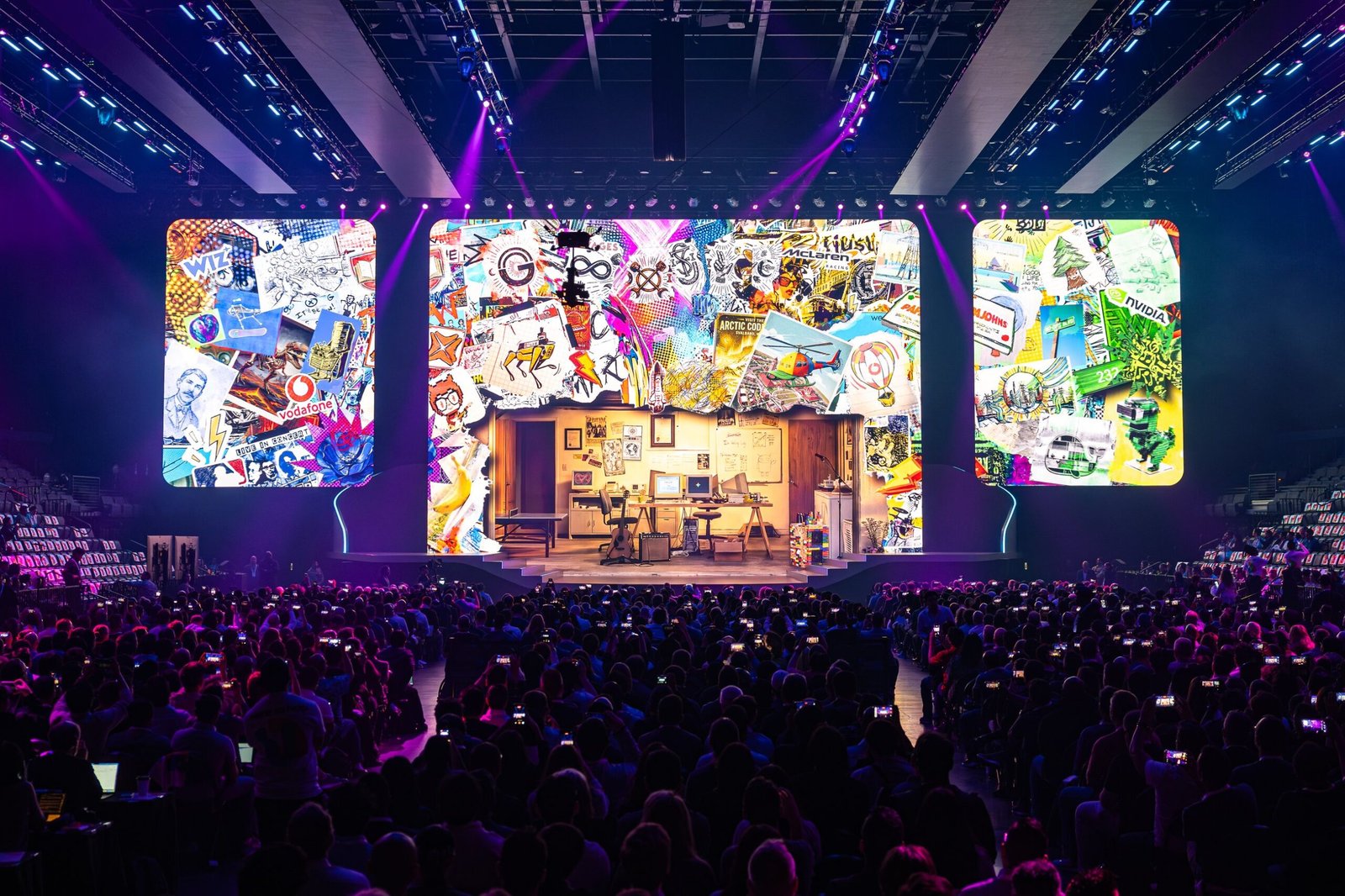
Thus far, everything had gone swimmingly, but then Richard accidentally “broke” the simulator agent. That provided a perfect opportunity for Megan O’Keefe, Senior Staff Developer Advocate, to show off Agent Interoperability and Gemini Cloud Assist, and how to use them to debug agents at scale.
“With these autonomous agents, the production challenge isn’t just scaling the infrastructure, it’s managing the reasoning, the tool calls — all the places in the system where something can go wrong!” Megan said.
Megan used Agent Runtime trace view to see where the problem was, and using natural language, launched a Cloud Assist Investigation to explore logs and events, which pointed to a specific line of code as the offender. Megan then opened up her Antigravity IDE (powered by Gemini 3, and connected via MCP) to find the problem (an insufficiently run “event compaction” run) and to suggest a fix (add a token_threshold parameter to the event compaction config). She approved the fix and committed it to source, triggering a redeployment to Agent Platform. Problem solved!
Scaling the agents
To this point, all of the presenters had been showing off agent services running as Cloud Run services. Bobby Allen, Group Product Manager, then showed how to convert the apps to Google Kubernetes Engine (GKE), which provides greater control, as well as to use a customized Gemma 4 model, all by vibe coding in the Antigravity editor, which is connected to Cloud Assist. Along the way, Bobby also migrated the agents from GCSFuse to a high-performance Lustre file system.
Closely related to scaling is sharing — making agents available for the world to use and build on. Ines Envid, Senior Director, Product Management and Jason Davenport, Area Technical Lead, showed how to build no-code agents from the Gemini Enterprise app, and how to integrate them with other, “high-code” agents.
Shifting down
Last but not least, it was time to talk about security and governance. “Agents give users and other agents new ways to intentionally — or unintentionally — expose data and behavior in ways that we may not want,” mused Emma.
The standard response to that is to “shift left” — move testing, quality, and performance evaluation earlier in the development process — but for developers, that usually means more work, Richard said. “It’s not sustainable for developers to be responsible for all the layers of the stack,” he said. Instead, “we need to shift down.”
To help, there’s Agent Identity and Agent Gateway, demoed by Ankur Kotwal, head of Cloud Developer Relations. Ankur showed how Agent Gateway uses IAM policies to ensure agent actions are only accessible by approved sources, and how Agent Identity provides each agent with a unique and immutable credential. Then, Agent Policies can be configured to provide guardrails for the agents.
Yinon Costica, Co-Founder and VP of Product at Wiz, then went a step further and showed how Wiz can scan your agent code and infrastructure, and Wiz Green Agent can suggest root cause remediations.
“It’s a full architecture for security to easily understand what you built without you having to actually explain it,” Yinon said. Better yet, he also showed using this functionality from Anthropic’s Claude Code with Opus. “With Wiz, we want to enable your choice of tools and models to fix and prevent real risks,” he said.