

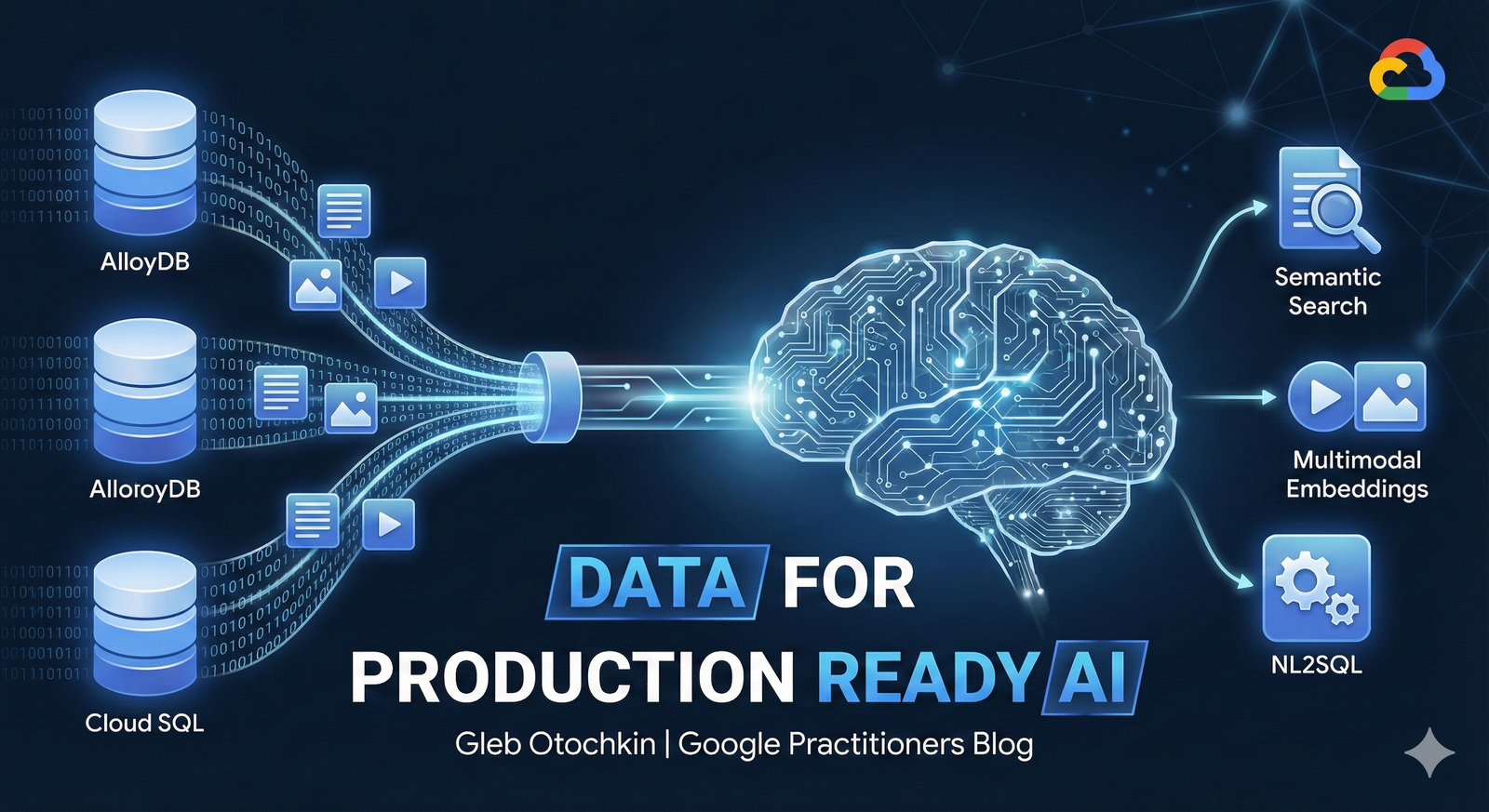
When discussing applications and systems using generative AI and the new opportunities they present, one component of the ecosystem is irreplaceable – data. Specifically, the data that companies gather, hold, and use daily. This data serves as the backbone for applications, analytics, knowledge bases, and much more. We use databases to store and work with this data, and most, if not all, AI-driven initiatives and new applications are going to use that data layer.
But how can we start to use the data in our AI systems? Let me introduce you to some of the labs showing how to prepare and use the data with AI models in Google databases.
Semantic Search: Text Embeddings in Database
Our journey starts by preparing our data for semantic search and running first tests to augment the Gen AI model’s response by grounding it with your semantic search results. The grounding data is the basis for RAG (Retrieval Augmented Generation). Then, you can improve the performance of your search by indexing your embeddings using the latest indexing techniques.
One of the options is the Google AlloyDB database, which has direct integration with AI models and supports the most demanding workloads. The following lab guides us through all the steps, starting from creating an AlloyDB cluster, loading sample data, and generating embeddings, to using those embeddings to generate an augmented response from the Gen AI model.