Let’s be honest: building an AI agent that works once is easy. Building an AI agent that works reliably in production, integrated with your existing React or Node.js application? That’s a whole different ball game.
(TL;DR: Want to jump straight to the code? Check out the Course Creator Agent Architecture on GitHub.)
We’ve all been there. You have a complex workflow—maybe it’s researching a topic, generating content, and then grading it. You shove it all into one massive Python script or a giant prompt. It works on your machine, but the moment you try to hook it up to your sleek frontend, things get messy. Latency spikes, debugging becomes a nightmare, and scaling is impossible without duplicating the entire monolith.
But what if you didn’t have to rewrite your entire application to accommodate AI? What if you could just… plug it in?
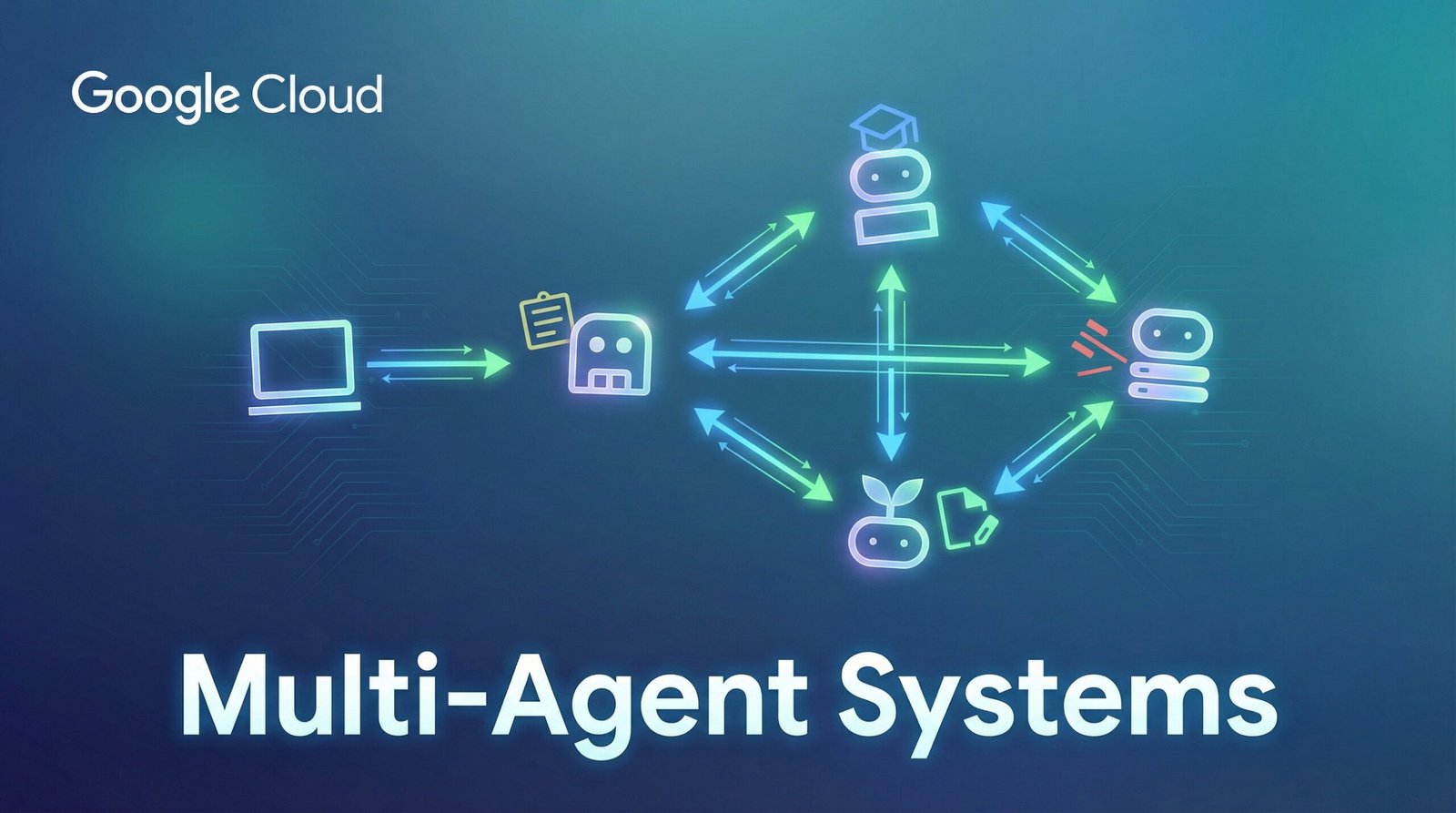
In this post, we’re going to explore a better way: the orchestrator pattern. Instead of just one powerful agent that does everything, we’ll build a team of specialized, distributed microservices. This approach lets you integrate powerful AI capabilities directly into your existing frontend applications without the headache of a monolithic rewrite.
We’ll use Google’s Agent Development Kit (ADK) to build the agents, the Agent-to-Agent (A2A) protocol to connect them and let them communicate with each other, and deploy them as scalable microservices on Cloud Run.
Why Distributed Agents? (And Why Your Frontend Team Will Love You)
Imagine you have a polished Next.js application. You want to add a “Course Creator” feature.
If you build a monolithic agent, your frontend has to wait for a single, long-running process to finish everything. If the research part hangs, the whole request times out. Additionally, you won’t have the opportunity to scale separate agents as needed. For example, if your judge agent requires more processing, you’ll have to scale all your agents up, instead of just the judge agent.
By adopting a distributed orchestrator pattern, you gain scalability and flexibility:
-
Seamless integration: Your frontend talks to one endpoint (the orchestrator), which manages the chaos behind the scenes.
-
Independent scaling: Is the judge step slow? Scale just that service to 100 instances. Your research service can stay small.
-
Modularity: You can write the high-performance networking parts in Go and the data science parts in Python. They just speak HTTP.